
ENGINEERING A BULLET TRAIN PROJECT
ALONGSIDE MUGGER CROCODILES
- 22 April 2026
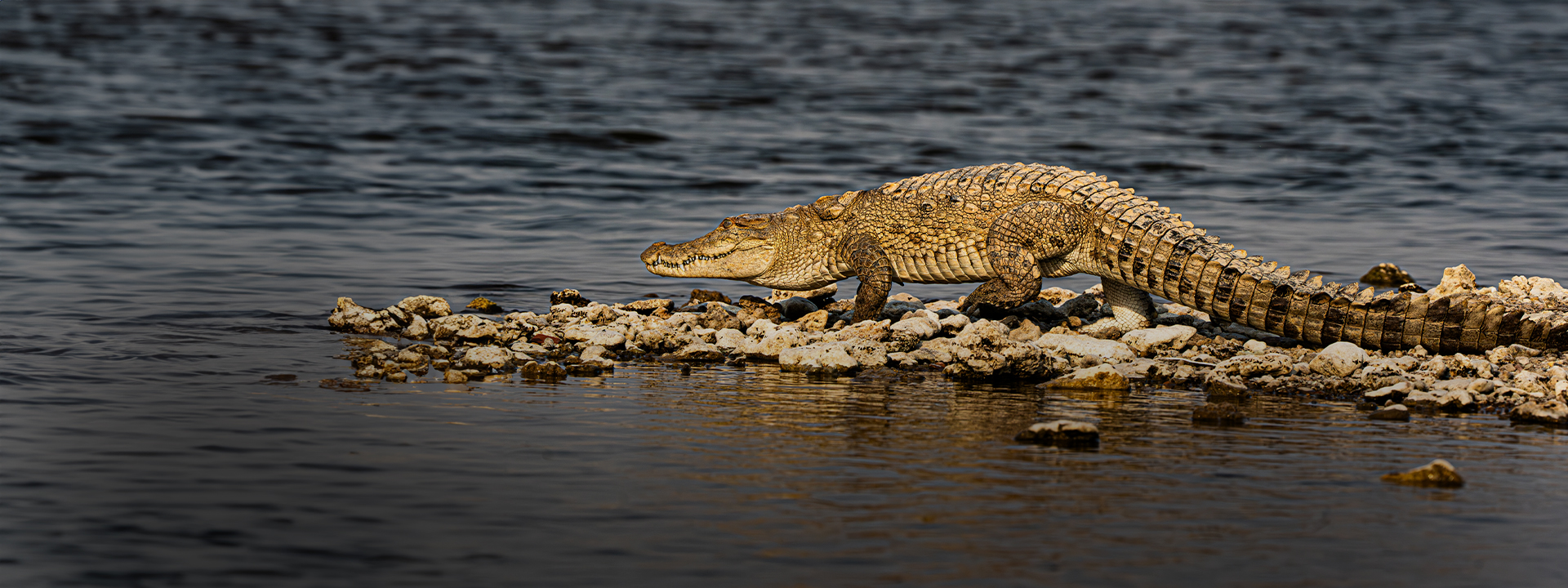
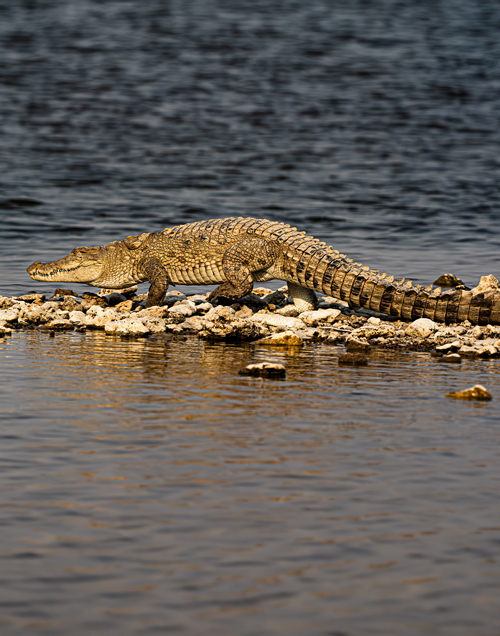
Along the banks of the Vishwamitri River, in Gujarat, an unlikely stakeholder is shaping the way L&T builds civil infrastructure.
The construction behemoths iconic Mumbai – Ahmedabad High Speed Rail [MAHSR or bullet train] project runs through a bask of mugger crocodiles (crocodylus palustris), a Schedule I species protected under the Wildlife Protection Act, 1972.
The mugger is both a symbol of ecological balance and a real on-ground challenge. For L&T’s Heavy Civil Infrastructure team executing the bullet train project, the task is not just about building at speed and scale but doing so while ensuring the safety of its workhands and the protection of this formidable resident of the river.
But for us at L&T, engineering excellence goes hand in hand with environmental stewardship. From safeguarding flamingo habitats on the Sewri mudflat (through which Mumbai’s Atal Setu, built by L&T, flows) to preserving marine ecosystems along the Coastal Road, the company has always believed in the symbiotic co-existence of progress and biodiversity.
Cut to the present, L&T considered the muggers on the Viswamitri River to be just as vital as the Bullet Train project.
Led by L&T’s ‘Environment Health Safety’ team, the company has put in place a ‘Crocodile Conservation Plan,’ combining scientific planning, safety management, understanding the potential negative impact of construction on the crocodile population, and building community awareness to ensure speedy project progress.
The findings of a baseline ecological survey by biodiversity experts that mapped crocodile habitats, basking zones, and nesting sites formed the basis for their Crocodile Conservation Plan. The survey helped the company formulate specific control measures such as restricting access to sensitive areas and adjusting work timings around the breeding season.
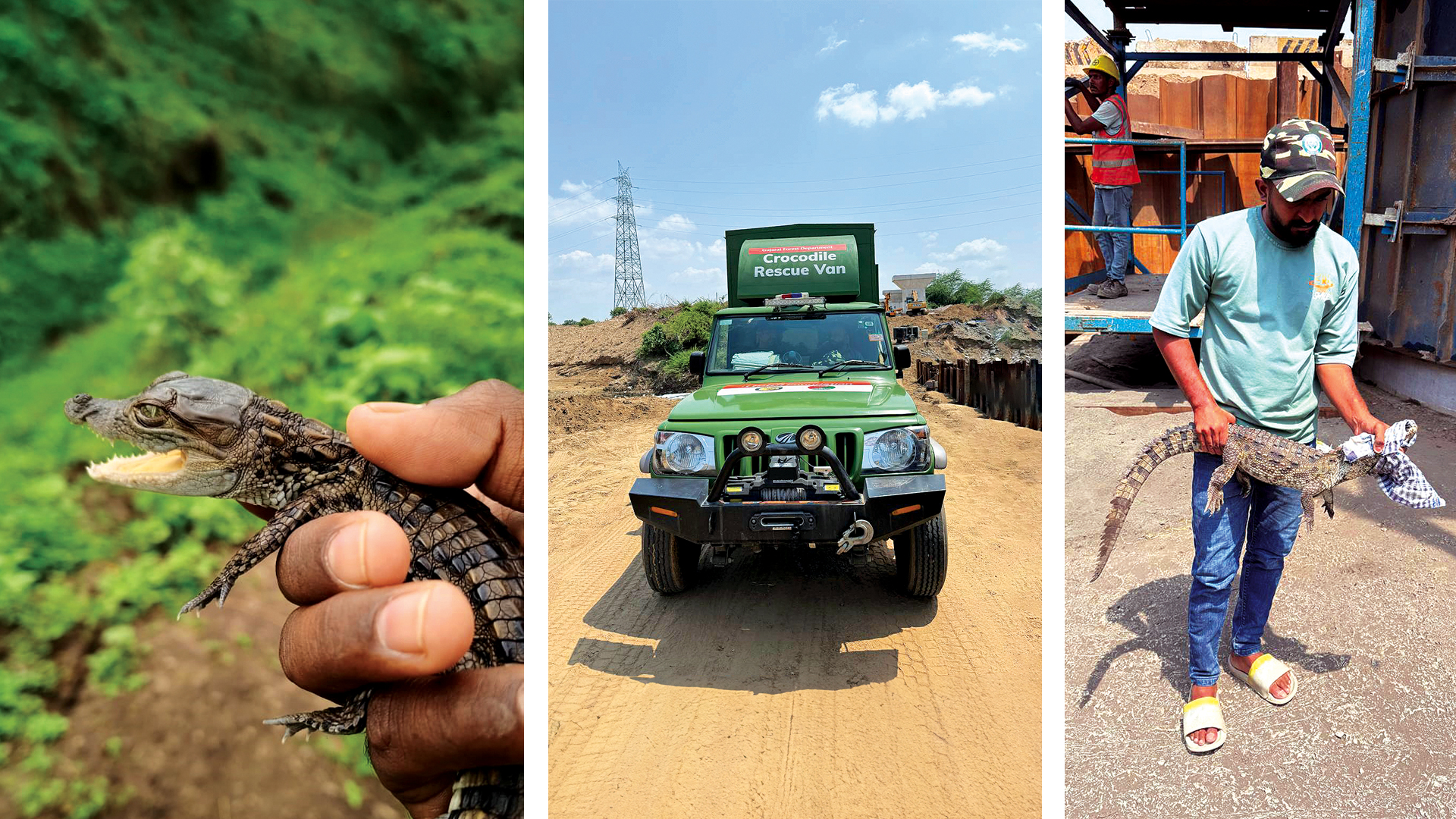
Encountering crocodiles inside the pile excavation threatened people’s safety, especially during the monsoons, for which crocodile handlers were deployed round the clock to avoid conflicts. Safety signages were put up at all locations where there was a likelihood of crocodile intervention, declaring them as ‘no-disturbance’ areas and fencing them off to prevent intrusions. This also acted as safe enclosures for the workers, away from the crocodile nesting areas.
The team also preserved ecosystem conduit pipes to maintain uninterrupted water flow and movement pathways for aquatic life. L&T also employed specialised wildlife rescue teams, equipped with capture cages and crocodile transport vehicles to keep reptile safe. The company also rescued and relocated nearly 20 crocodiles from high-risk construction zones to protected habitats.
As a part of awareness programmes for both workers and local communities to reduce their fear of crocodiles, over 150 personnel were trained in safe practices in crocodile-prone zones, including what to do during sightings.
That aside, safety PPEs, warning signages, crocodile exclusion fencing and emergency protocols have been established to ensure preparedness in the event of an encounter.
By conserving the crocodiles, the L&T project team has not only protected an endangered species but also indirectly safeguarded the larger biodiversity in the Vishwamitri ecosystem that includes birds, amphibians and fish species dependent on the same habitat.
Consequently, there has been a rise in mugger crocodile population from 275 in 2020 to 442 by 2025 in the Vishwamitri River region.
With careful planning and a deep respect for environment and biodiversity, L&T has shown that even large-scale infrastructure projects, such as India’s first bullet train project, can coexist responsibly with the natural world.


