- Sustainability
- Planet
- Energy and Emissions
Contact
For more information or to give feedback please email us at:
sustainability@larsentoubro.com
© 2025 LARSEN & TOUBRO LIMITED. All rights reserved.


We believe Sustainable Progress is not just an ambition but a shared responsibility. Through optimal use of energy, decarbonising energy consumption through renewable energy, reducing water consumption, waste minimisation and management, use of recycled material and adopting sustainable processes, we aim to keep amplifying our positive impact on the planet and its people, thus creating a meaningful impact for our stakeholders. We have committed towards achieving carbon and water neutrality, and a snapshot of progress made is showcased here.
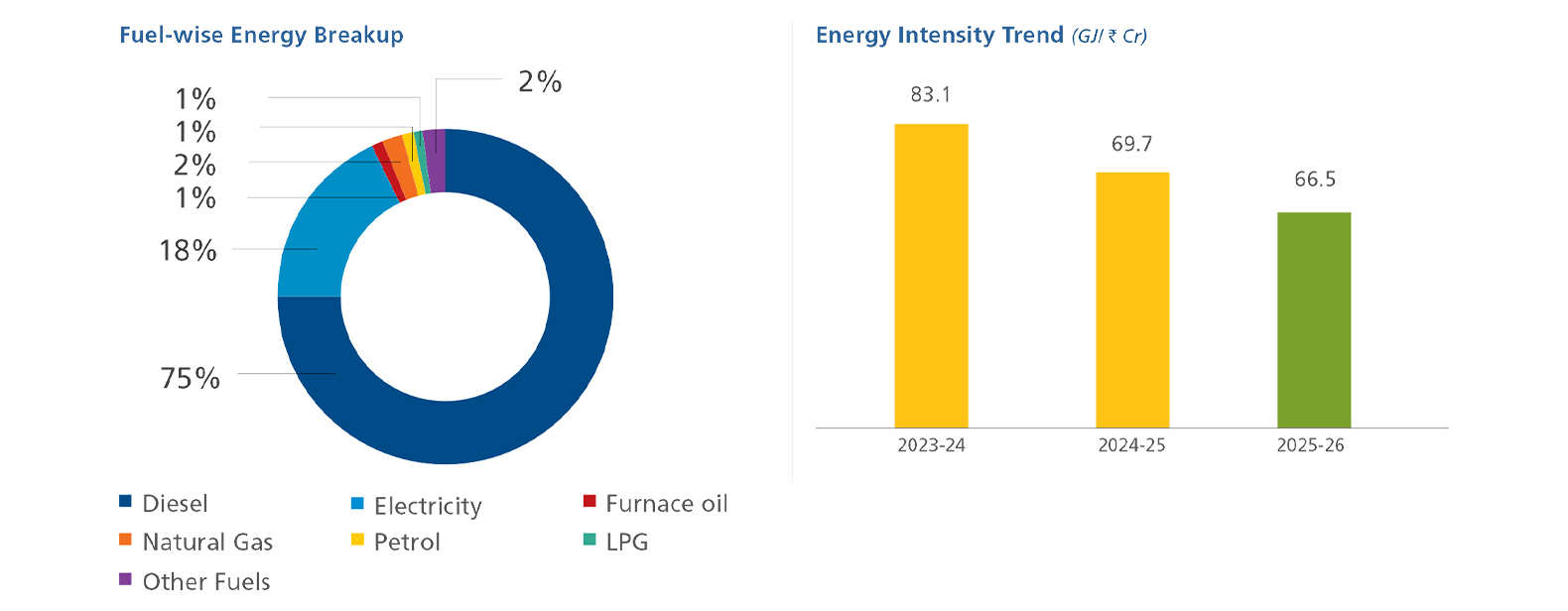
Our operations consumed 10.2 million GJ of energy in FY 2025–26, with diesel continuing to be the primary energy source across projects and facilities. At the same time, we are steadily increasing the share of cleaner energy in our mix through focused renewable energy initiatives.
Renewable electricity consumption increased to 19% of total electricity use in FY 2025–26, up from 15% in the previous year — representing a 42% increase year-on-year. This progress reflects initiatives implemented across locations to enhance energy efficiency and expand renewable electricity adoption.
As the Company’s energy profile remains significantly dependent on fuel-based consumption, renewable energy currently accounts for 4.3% of total energy consumption. We continue to evaluate and scale multiple pathways for sourcing renewable electricity and renewable fuels as part of our broader decarbonisation and energy transition journey.
The chart below presents the contribution of different energy sources to the Company’s overall energy mix.
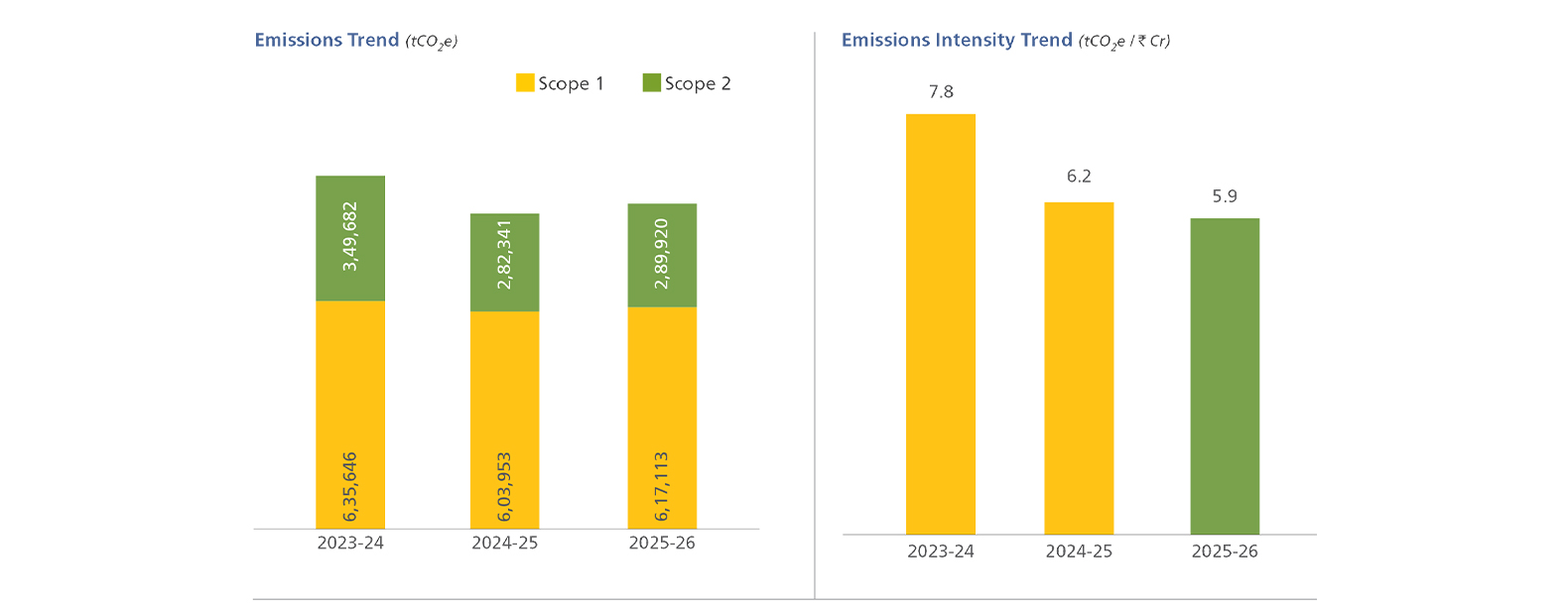
Our greenhouse gas (GHG) footprint spans direct operations, purchased electricity and value chain activities across businesses, projects and facilities.
|
Scope 1 emissions |
Scope 2 emissions |
Scope 3 emissions |
|
617,113 tCO₂e |
289,920 tCO₂e (market-based) and 359,421 tCO₂e (location-based) |
6,548,226 tCO₂e. |